Back
Quantitative vs Qualitative Survey Questions

Matthieu Saussaye


Choosing the right survey questions can make the difference between collecting basic answers and uncovering insights that actually help you make better decisions.
Some questions help you measure what people think. Others help you understand why they think that way.
This is the core difference between quantitative survey questions and qualitative survey questions.
Quantitative questions give you numbers, scores, percentages, and trends. Qualitative questions give you explanations, motivations, objections, emotions, and context.
For strong market research, product validation, pricing research, concept testing, or customer discovery, the best approach is often not choosing one over the other. It is combining both.
At SmartInterview, we help teams go beyond traditional surveys by combining structured survey questions with AI-powered qualitative interviews. This allows you to measure customer feedback while also understanding the deeper reasons behind each answer.
You can try the platform by clicking here to try for free
What Are Quantitative Survey Questions?
Quantitative survey questions are questions designed to collect measurable data.
They usually use closed-ended answer formats such as:
Multiple choice
Rating scales
Likert scales
Yes/no questions
Ranking questions
Numeric answers
Single-select or multi-select questions
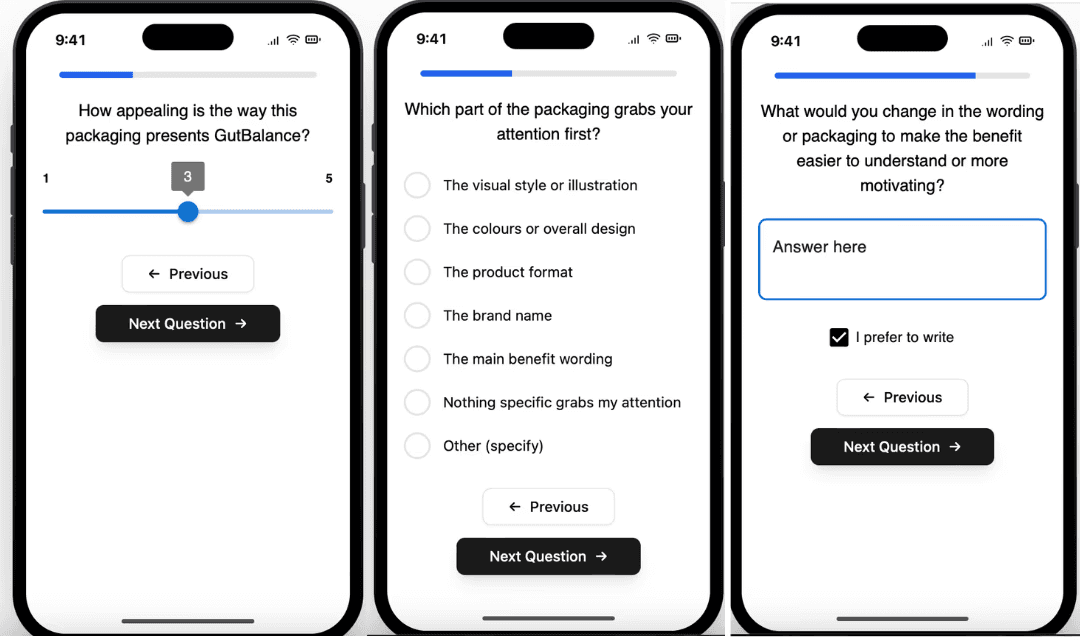
Start your survey here for free
The goal of a quantitative question is to produce data that can be counted, compared, segmented, and analyzed statistically.
For example:
“How likely are you to buy this product?”
The answer could be measured on a scale from 1 to 5 or 1 to 10. This makes it easy to compare responses across different audiences.
Quantitative survey questions are especially useful when you want to know
How many people have a specific need
How strong the demand is
Which option people prefer
How satisfied customers are
How likely people are to buy
Which price range feels acceptable
How different customer segments compare
In short, quantitative questions help you understand what is happening at scale.
What Are Qualitative Survey Questions?
Qualitative survey questions are open-ended questions designed to collect deeper, more detailed answers.
Instead of asking people to select from a fixed list of options, qualitative questions invite respondents to explain their thoughts in their own words.
For example:
“What would make you hesitate before buying this product?”
This type of question does not give you a simple percentage immediately. But it can reveal extremely valuable insights about trust, pricing, positioning, product expectations, perceived value, or missing information.
Qualitative survey questions are useful when you want to understand:
Why people choose one option over another
What motivates customers
What frustrates them
What objections they have
What language they use to describe their problem
What would make them trust your solution
What would make them convert
In short, qualitative questions help you understand why something is happening.
Start your survey here for free
Quantitative vs Qualitative Survey Questions: The Main Difference
The simplest way to understand the difference is this:
A quantitative question tells you that 64% of respondents prefer Concept A.
A qualitative question tells you why they prefer Concept A, what they understood, what they liked, what confused them, and what would make the concept stronger.
Both types of questions are valuable, but they answer different research needs.
Question Type | Best For | Example |
|---|---|---|
Quantitative questions | Measuring trends, scores, preferences, and behaviors | “How likely are you to buy this product?” |
Qualitative questions | Understanding motivations, objections, and context | “Why would or wouldn’t you buy this product?” |
When used together, they create a much more complete view of your market, customers, or users.
Mix qualitative and quantitative in your survey here for free
Benefits of Quantitative Survey Questions
Quantitative survey questions are essential when you need clear, structured, and comparable data.
They are especially useful for market research, customer satisfaction surveys, concept testing, pricing research, and product-market fit surveys.
1. Measure Demand
Before launching a product, feature, campaign, or offer, quantitative questions can help you measure whether people are interested.
Example:
“How interested would you be in this solution?”
Answer options:
Very interested
Somewhat interested
Neutral
Not very interested
Not interested at all
This gives you a clear signal of demand before investing more time, budget, or resources.
2. Compare Customer Segments
Quantitative questions allow you to compare different groups of respondents.
For example, you can compare responses by:
Age group
Country
Industry
Company size
Job role
Customer type
Buyer maturity
Previous purchase behavior

Start your survey here for free
This is especially useful when you want to identify which segment has the strongest need, highest willingness to pay, or best product-market fit.
3. Prioritize Features
When building or improving a product, quantitative survey questions help you identify which features matter most.
Example:
“Which feature would be most valuable to you?”
Answer options:
Faster setup
Lower price
Better reporting
More automation
More integrations
Better customer support
This helps product teams avoid guessing and prioritize based on real customer feedback.
4. Track Satisfaction Over Time
Quantitative questions are ideal for tracking metrics such as satisfaction, loyalty, awareness, and purchase intent.
Examples include:
Net Promoter Score
Customer satisfaction score
Product satisfaction score
Brand awareness
Purchase likelihood
Feature importance
Start your survey here for free
Because the answers are structured, you can compare results over time and monitor whether your product, messaging, or customer experience is improving.
5. Make Data Easier to Communicate
Quantitative insights are easy to present to teams, investors, clients, or stakeholders.
Instead of saying, “People seemed interested,” you can say:
“72% of respondents said they would consider using this product.”
That kind of data is easier to communicate and easier to use in decision-making.
Benefits of Qualitative Survey Questions
Qualitative survey questions are essential when you need depth, nuance, and context.
They are especially useful for understanding customer pain points, testing product concepts, improving messaging, analyzing objections, and discovering unmet needs.
Start your survey here for free
6. Understand the Why Behind the Data
A quantitative answer may show that people are not convinced by your offer.
But without qualitative feedback, you may not know why.
The problem could be:
The price feels too high
The value is unclear
The message lacks credibility
The product does not solve an urgent problem
The respondent does not trust the brand yet
The concept is interesting but poorly explained
A qualitative follow-up question helps you identify the real reason.
7. Discover Customer Objections
Objections are one of the most valuable things to uncover in market research.
A simple question like:
“What would make you hesitate before buying?”
can reveal barriers related to trust, budget, timing, usability, internal approval, competitor habits, or perceived risk.
These insights can directly improve your landing page, sales pitch, pricing page, product roadmap, or advertising message.
8. Improve Your Marketing Message
Qualitative answers show you how customers naturally describe their problems and expectations.
This is extremely useful for marketing.
Instead of inventing messaging internally, you can use the words your customers already use.
For example, respondents may not say they need an “AI-powered insight generation platform.” They may say:
“We need to understand why users don’t convert.”
That wording is often more powerful because it reflects the real customer pain.
Start your survey here for free
9. Find Unexpected Insights
Closed-ended questions only test the options you already had in mind.
Open-ended qualitative questions allow respondents to mention things you did not expect.
This is where many of the best product, messaging, and positioning insights come from.
10. Build Better Personas
Personas should not only be based on demographics.
Good personas include:
Motivations
Frustrations
Buying triggers
Objections
Desired outcomes
Decision criteria
Language patterns
Qualitative survey questions help uncover these deeper elements and make personas more useful for product, marketing, and sales teams.
Start your survey here for free
Examples of Quantitative Survey Questions
Here are practical examples of quantitative survey questions you can use in market research, product research, or customer feedback surveys.
Purchase Intent Question
How likely would you be to buy this product?
Very likely
Somewhat likely
Not sure
Somewhat unlikely
Very unlikely
Start your survey here for free
Pricing Research Question
Which price range would feel acceptable for this solution?
Less than CHF 50/month
CHF 50–100/month
CHF 100–250/month
CHF 250–500/month
More than CHF 500/month
Start your survey here for free
Product Satisfaction Question
How satisfied are you with your current solution?
Very satisfied
Satisfied
Neutral
Dissatisfied
Very dissatisfied
Start your survey here for free
Feature Prioritization Question
Which feature would be most useful to you?
Faster setup
Better dashboard
More automation
Better integrations
Lower price
More customization
Start your survey here for free
Problem Frequency Question
How often do you experience this problem?
Every day
A few times per week
A few times per month
Rarely
Never
Start your survey here for free
Message Testing Question
How clear is this message?
Very clear
Somewhat clear
Neutral
Somewhat unclear
Very unclear
Concept Testing Question
How appealing is this concept?
Extremely appealing
Very appealing
Moderately appealing
Slightly appealing
Not appealing at all
Start your survey here for free
Examples of Qualitative Survey Questions
Here are examples of qualitative survey questions that help uncover deeper customer insights.
Question Type | Example Question |
|---|---|
Customer Discovery Question | Can you describe the last time you experienced this problem? |
Concept Testing Question | What is your first impression of this concept? |
Product Feedback Question | What would make this product more useful for you? |
Objection Discovery Question | What would make you hesitate before using this solution? |
Pricing Research Question | How do you feel about this price, and why? |
Message Testing Question | What part of this message feels most convincing or least convincing? |
Competitor Research Question | What do you currently use instead, and what do you like or dislike about it? |
Product-Market Fit Question | What would you miss most if this product no longer existed? |
Customer Experience Question | What is the most frustrating part of your current experience? |
Buying Motivation Question | What would need to happen for you to seriously consider buying this solution? |
Start your survey here for free
Quantitative questions work best when you already know the possible answer options and want to compare responses across a larger sample.
For example, if you are testing three product concepts, you can ask respondents to rate each concept on clarity, usefulness, trust, originality, and likelihood to buy.
This gives you a structured scorecard.
When Should You Use Qualitative Survey Questions?
You should use qualitative survey questions when your goal is to understand the reasons behind people’s answers.
Take care to use the AI builder of smartinterview in order to guarantee the quality of any open-ended question you would deploy. When you formulation is correct, you can go to the next one.

Qualitative questions are ideal when you need to:
Explore a new market
Understand customer pain points
Discover objections
Improve messaging
Test positioning
Understand why people buy
Understand why people do not buy
Capture emotional reactions
Generate ideas for product improvement
Build stronger personas
Qualitative questions are especially useful when you are still learning and do not yet know which answer options to include in a survey.
They help you discover the language, needs, and objections that should later be tested quantitatively.
We recommend you to use maximum 6 qualitative questions per questionnaire.
Don't worry, the AI builder of smartinterview is here to help you and have limitation guardrail before launching your survey., in order to guarantee high quality.
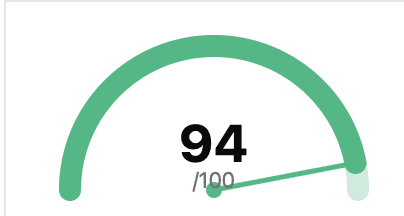
When it's finally green, you can launch your survey with smartinterview (connect to your dashboard)
Why You Should Combine Quantitative and Qualitative Questions
The best surveys often combine both quantitative and qualitative questions.
For example:
“How likely are you to buy this product?”
Followed by:
“What is the main reason for your answer?”
The first question gives you a measurable score. The second question explains the score.
This combination is powerful because it prevents misleading conclusions.
A low purchase intent score could mean the product is not useful. But it could also mean the price is too high, the message is unclear, the target audience is wrong, or the concept needs more proof.
Without qualitative follow-up, you may optimize the wrong thing.
How SmartInterview Makes Survey Research Smarter
Traditional surveys are useful, but they often stop too early.
They ask a fixed list of questions and collect static answers.
SmartInterview helps teams collect deeper insights by combining structured survey questions with AI-powered qualitative interviews.
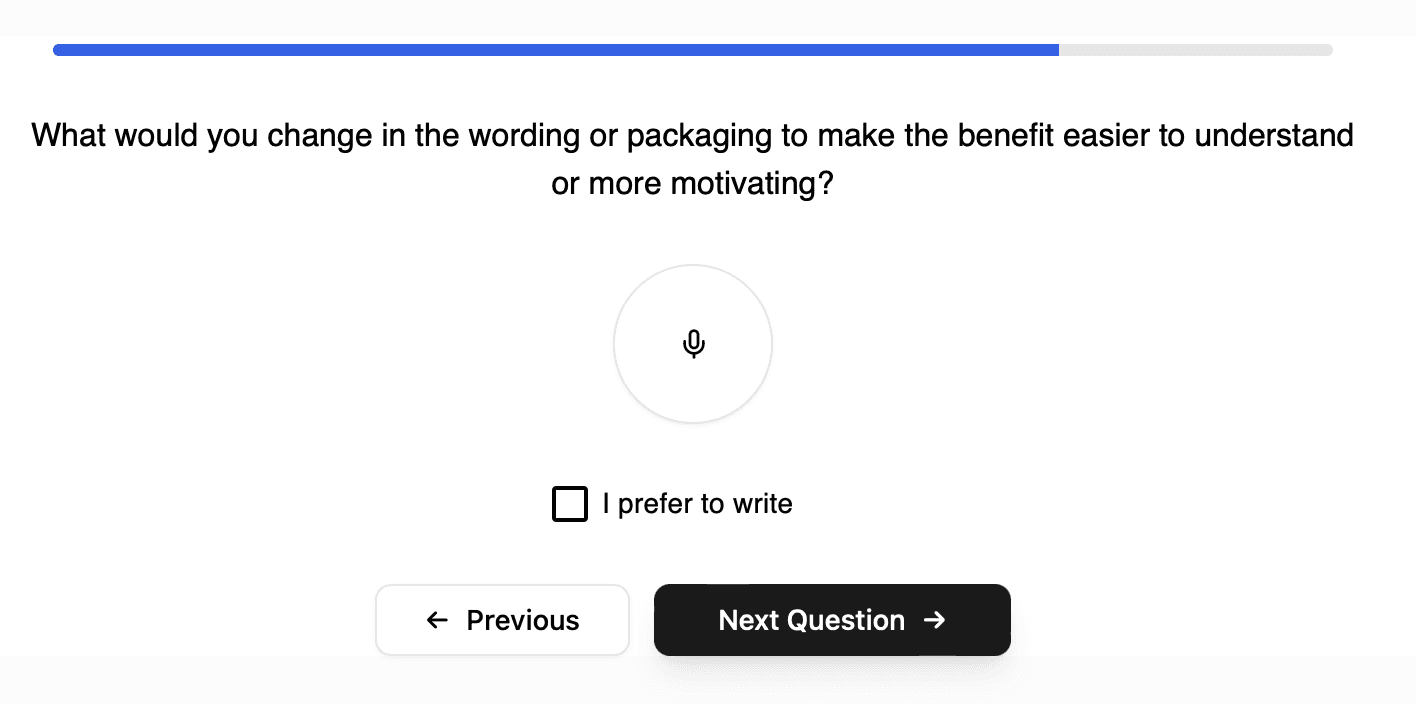
Instead of only asking respondents to select an answer, SmartInterview can ask intelligent follow-up questions based on what each person says.
This creates a more conversational research experience and helps uncover insights that traditional forms often miss.
With SmartInterview, teams can run research for:
Concept testing
Message testing
Product-market fit validation
Pricing research
Customer discovery
User retention analysis
Offer optimization
Market research
Customer experience research
Brand perception research
SmartInterview helps transform open-ended responses into clear, actionable insights so teams can make faster and better decisions.
Example: Using SmartInterview for Concept Testing
Imagine you are testing a new product concept.
A traditional quantitative survey might tell you that 48% of respondents are interested.
That is useful, but it is not enough.
With SmartInterview, you can also understand:
Why people are interested
Why others are not convinced
Which part of the concept feels unclear
Which benefit is most attractive
What price feels acceptable
What would increase trust
What alternatives people already use
What message would make the product more compelling
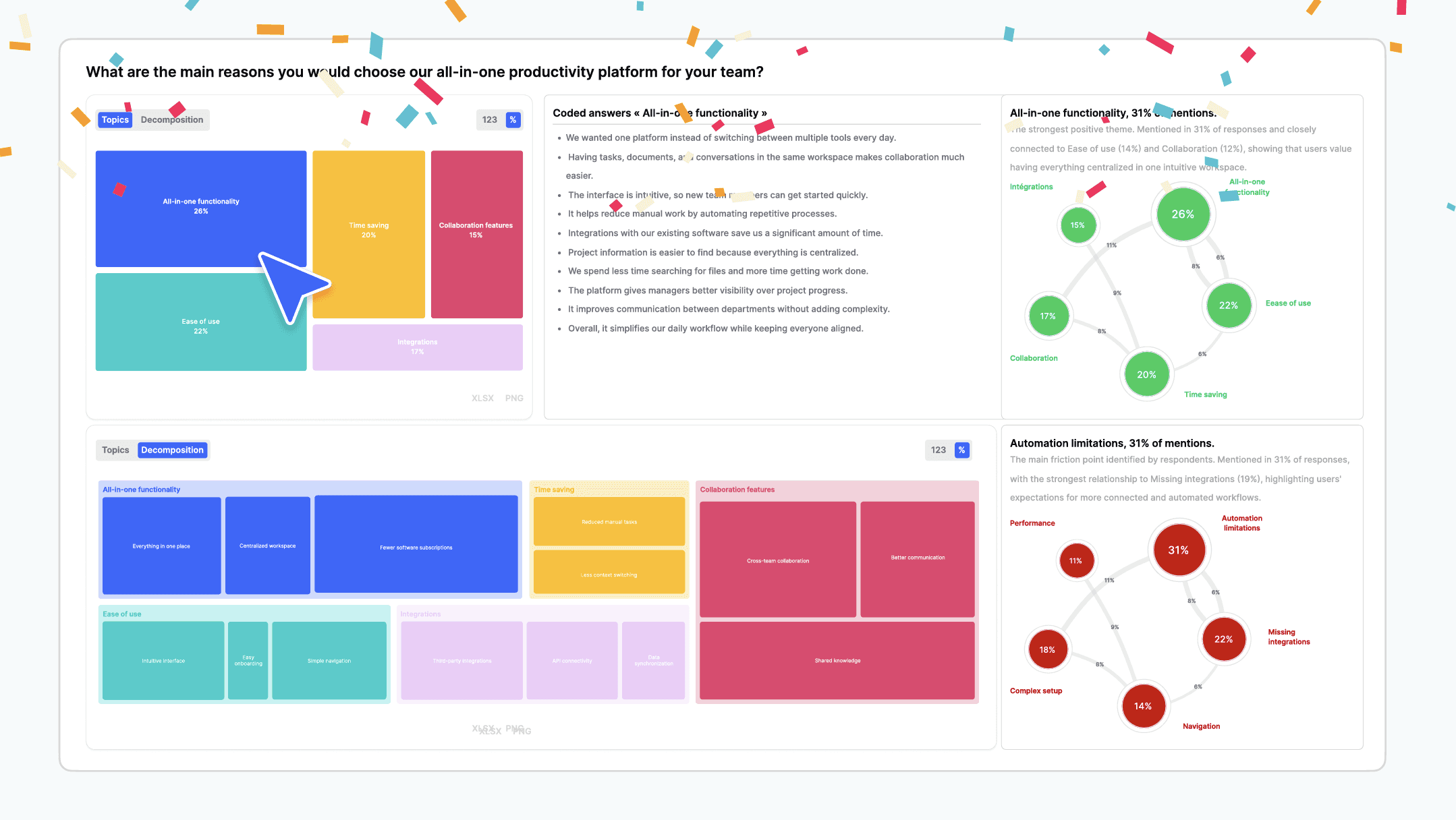
This gives you more than a number.
It gives you direction.
You can improve your product, refine your positioning, adjust your pricing, and identify the best audience before investing too much time or money.
Quantitative vs Qualitative Survey Questions: Final Recommendation
Where I draw the line between AI-led and human research
On quantitative questions, I let AI handle routing, deduplication, fraud detection, basic stats, segment splits, and charting. I keep humans on design: hypotheses, sample frame, scale wording, price and intent measures, controls, and interpreting anomalies.
For qualitative questions, I let AI run structured follow ups, transcribe, cluster themes, score sentiment, and surface quotes. I or a researcher read raw answers per segment, validate themes, keep minority signals, choose verbatims, and turn findings into decisions. When teams let AI author the closed scales and infer the why from open text without review, I have seen two failures: biased options that shape the numbers, and summaries that flatten objections into generic price or trust. That mix makes the quantitative look clean and the qualitative shallow, and it can push a weak concept forward.
Matthieu Saussaye, Founder of SmartInterview. Written from the studies we run on SmartInterview, not from a content brief.
Use quantitative survey questions when you need to measure.
Use qualitative survey questions when you need to understand.
Use both when you need to make an important business decision.
For startups, product teams, marketers, agencies, and research teams, combining quantitative and qualitative research is one of the best ways to reduce uncertainty and understand what customers really think.
SmartInterview helps you go beyond simple survey responses by using AI-powered interviews to reveal the motivations, objections, and insights behind the data.
Ready to Get Better Customer Insights?
SmartInterview helps you create smarter surveys, ask better follow-up questions, and turn customer feedback into actionable insights.
Whether you are testing a product concept, validating product-market fit, optimizing your pricing, improving your messaging, or understanding customer objections, SmartInterview helps you collect the insights you need to move forward with confidence.
Start using SmartInterview and discover what your customers really think.
FAQ
What is the difference between quantitative and qualitative survey questions?
Quantitative survey questions collect measurable data such as scores, percentages, ratings, or rankings. Qualitative survey questions collect open-ended answers that explain motivations, opinions, objections, and emotions.
When should I use qualitative survey questions?
Use qualitative survey questions when you want to understand customer motivations, objections, frustrations, needs, expectations, or the reasons behind a quantitative score.
When should I use quantitative survey questions?
Use quantitative survey questions when you want to measure demand, compare segments, prioritize features, track satisfaction, estimate willingness to pay, or create clear decision metrics.
How does SmartInterview help with qualitative survey research?
SmartInterview uses AI-powered qualitative interviews to ask intelligent follow-up questions based on respondent answers. This helps teams uncover deeper insights than traditional static surveys.
Can SmartInterview be used for market research?
Yes. SmartInterview can be used for market research, concept testing, message testing, pricing research, product-market fit validation, customer discovery, and customer experience research.

