Smartinterview: Designing the AI context for user interviews
Written by
Matthieu SAUSSAYE
Published
Content
Designing an AI interview Context in Smartinterview
Designing an AI-powered interview in SmartInterview goes far beyond writing a single question.
The quality of insights depends on how well the interview context is defined.
The interview context allows the AI to behave like a skilled human interviewer:
asking relevant questions, adapting follow-ups, respecting language preferences, and maintaining visual and brand consistency throughout the experience.
This article explains, step by step, how to design a robust and scalable AI interview context in SmartInterview.
Skipping the learning and use a template
You can skip this step and directly use the following link to create your survey: link
1. Choosing the context of the interview
What is an interview context?
The interview context defines:
What the objective of the interview is.
How the AI should behave.
It acts as a shared frame of reference for all questions and follow-ups.
Key elements to define
Before creating any question, clearly think about:
Role
What is the role of the interviewer: Market Researcher or a HR person?
Research objective
Exploration (discover themes, motivations, perceptions)
Validation (test assumptions or hypotheses)
Evaluation (assess a concept, product, or service)
Target respondent
Consumer, professional, expert, or general public
Level of familiarity with the topic
Interview tone
Neutral and factual
Empathetic and conversational
Analytical and expert-driven
Example of a context definition
Here is a very neutral and simple guideline of an english brand testing AI context, for familiar respondents.
You can actually copy paste the topic and re-use it inside your survey
You are a market research specialist.
You are trying to understand what a person associates with Coca-Cola.
You interview them to learn what comes to mind and how they perceive the brand. The person speaks, and their comments are transcribed into text.
You should systematically ask questions related to their answers in order to obtain as much detail as possible.
Always respond in English and always ask follow-up questions
In this example:
The first line defined the role : market research specialist (very important)
The 2-3-4 lines represents the research objective
The 5 represent the rules : English language and asking question
2. Selecting the number of follow-up questions
LOI in a very strong concerns when we run market research. as we don't want to explode our cost of research.
LOI concerns
SmartInterview is a cost-effective solution that significantly reduces time-to-insight.
Based on 278 open-ended responses collected on tablets from European respondents in 2024, the median length of interview (LOI) per open-ended question is 13.75 seconds per answer.
This means that on mobile or desktop, you can reasonably expect a median response time below 10 seconds per follow-up question, thanks t
o our new design feature that automatically streams the open-ended prompt directly onto the respondent’s screen.
Insight quality concerns
Based on our experiments, we found that programming 2–3 follow-up questions is the optimal way to use the product while minimizing respondent fatigue.
In this configuration, open-ended questions become a powerful asset for capturing deeper insights, without increasing cognitive load or interview fatigue for respondents.
3. In-platform tutorial
With a chosen context and follow-up number, the next step is to design the survey.
Skipping the learning and use a template
You can skip this step and directly use the following link to create your survey: link
1- Creating the question
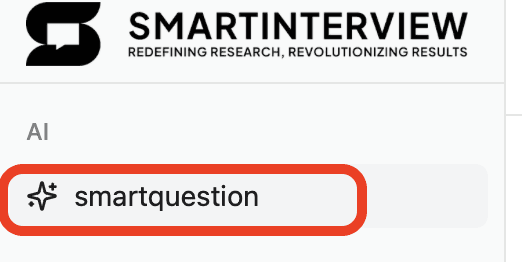
Click on the smart question in the builder
2- Designing the smartquestion
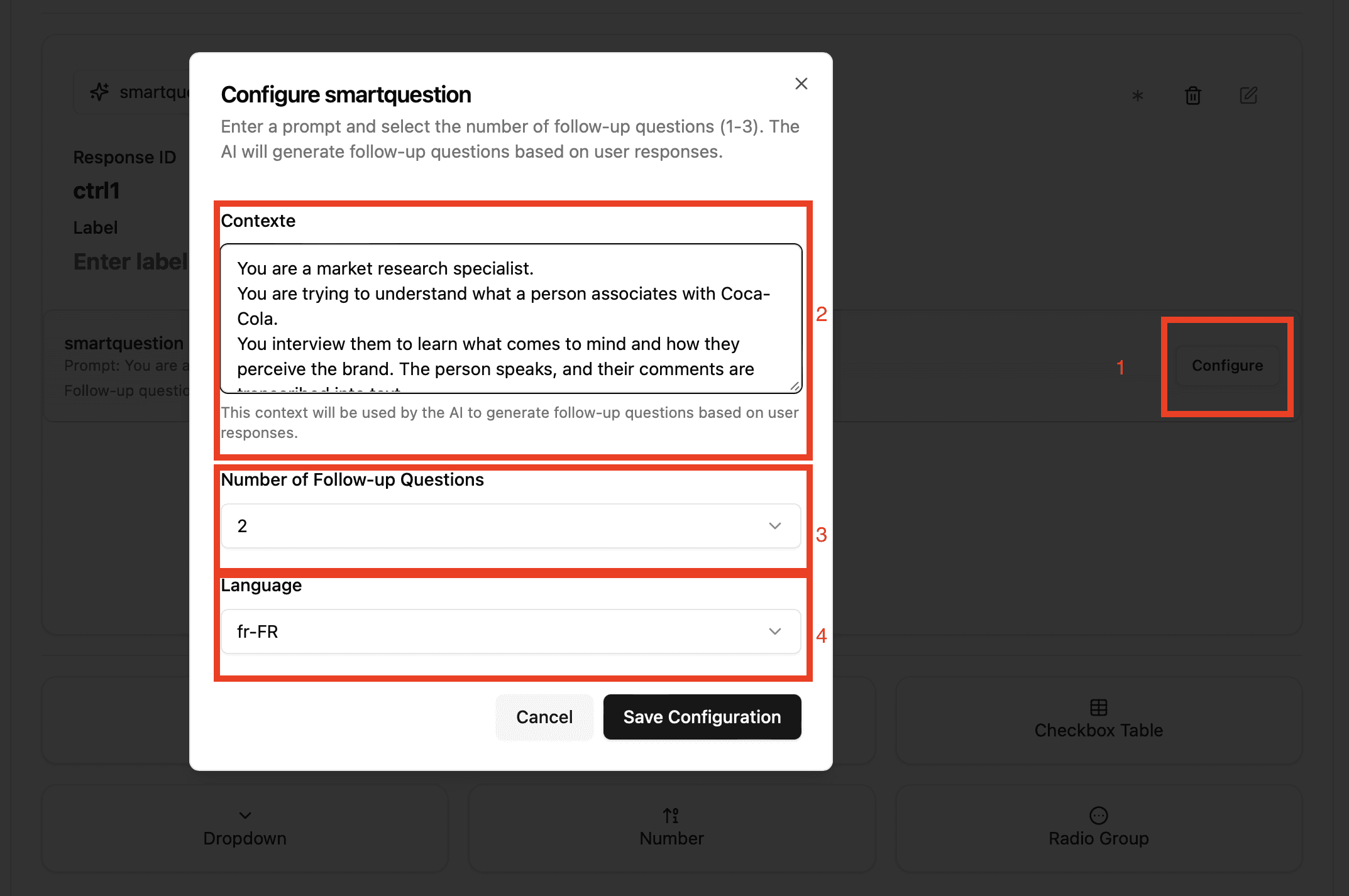
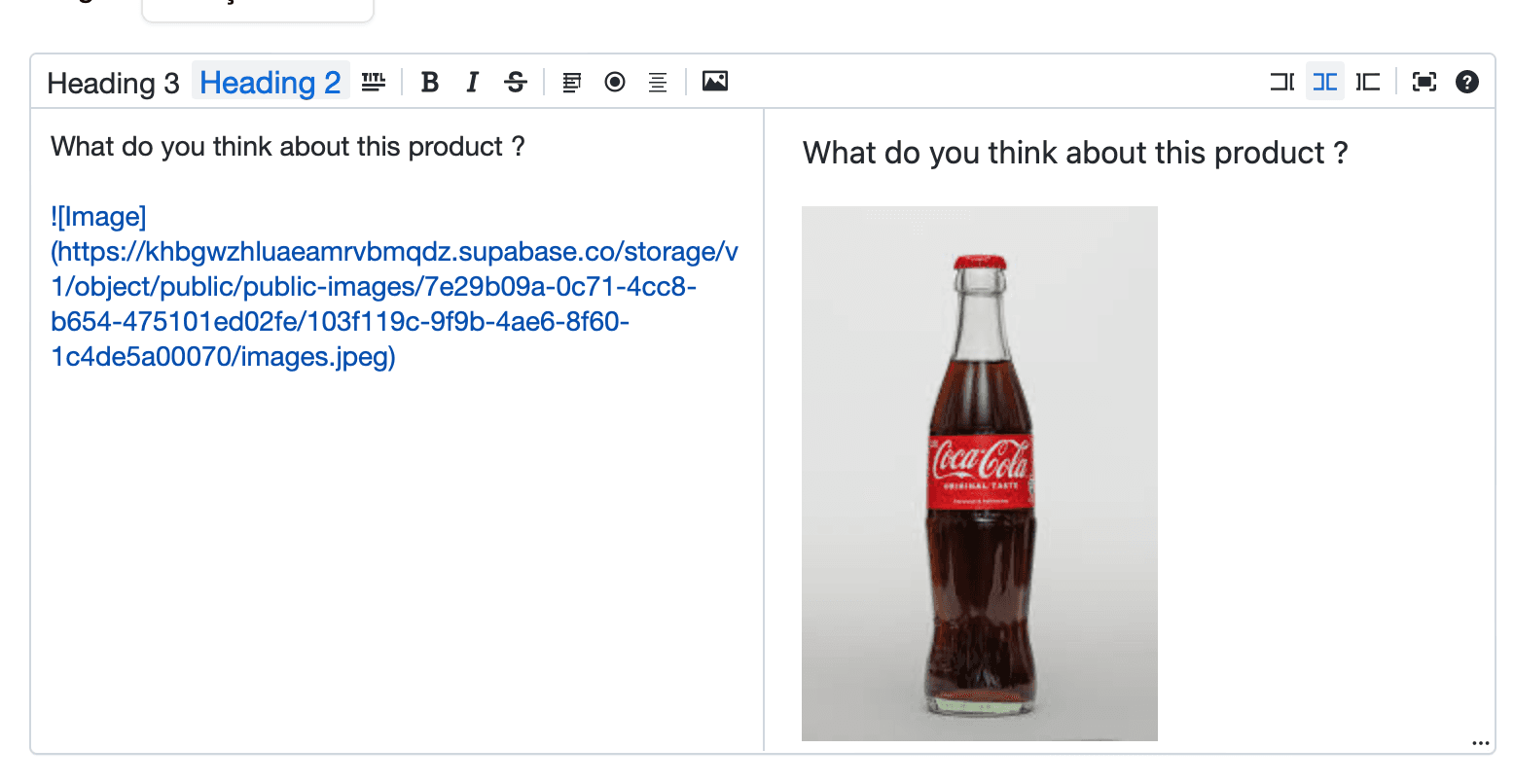
By clicking on "Configure", you will enter the context, the number of follow-up and the language of the interview.
Adapting Style, Colors, and Interview Templates
1 - Why visual consistency matters
A consistent interface:
Builds trust for respondents
Reduce fatigue and mis-understanding
Improves completion rates
Respondents are more engaged when the interview feels coherent and professional.
2 - Elements to align
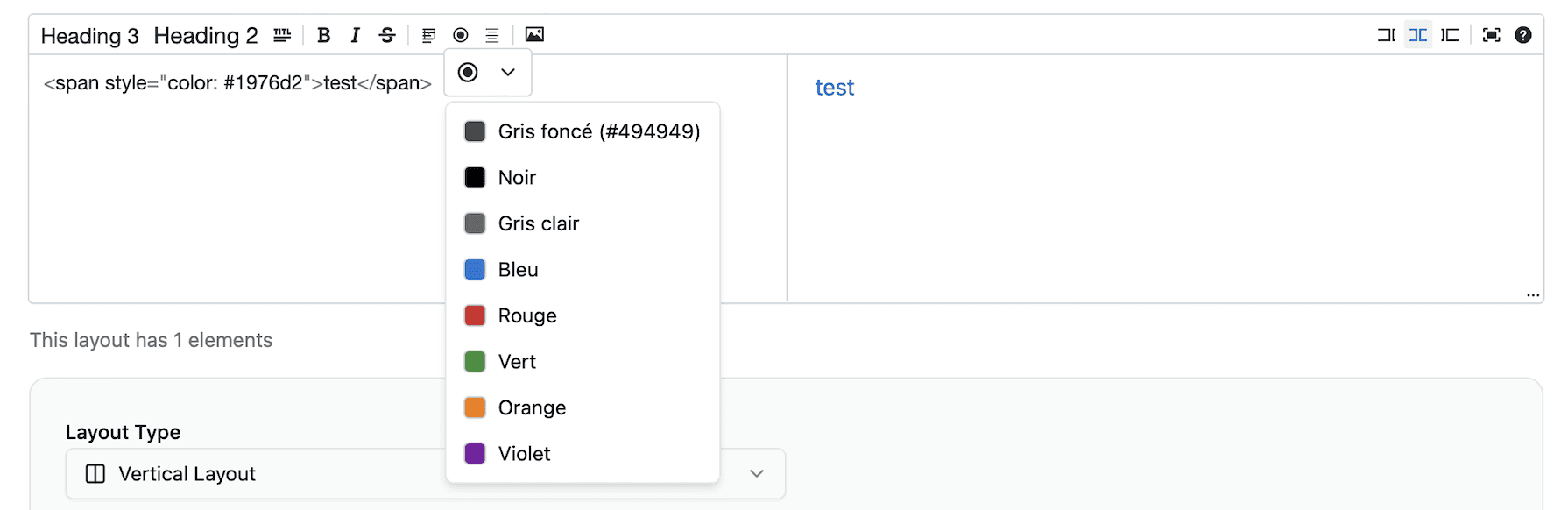
Colors and brand palette
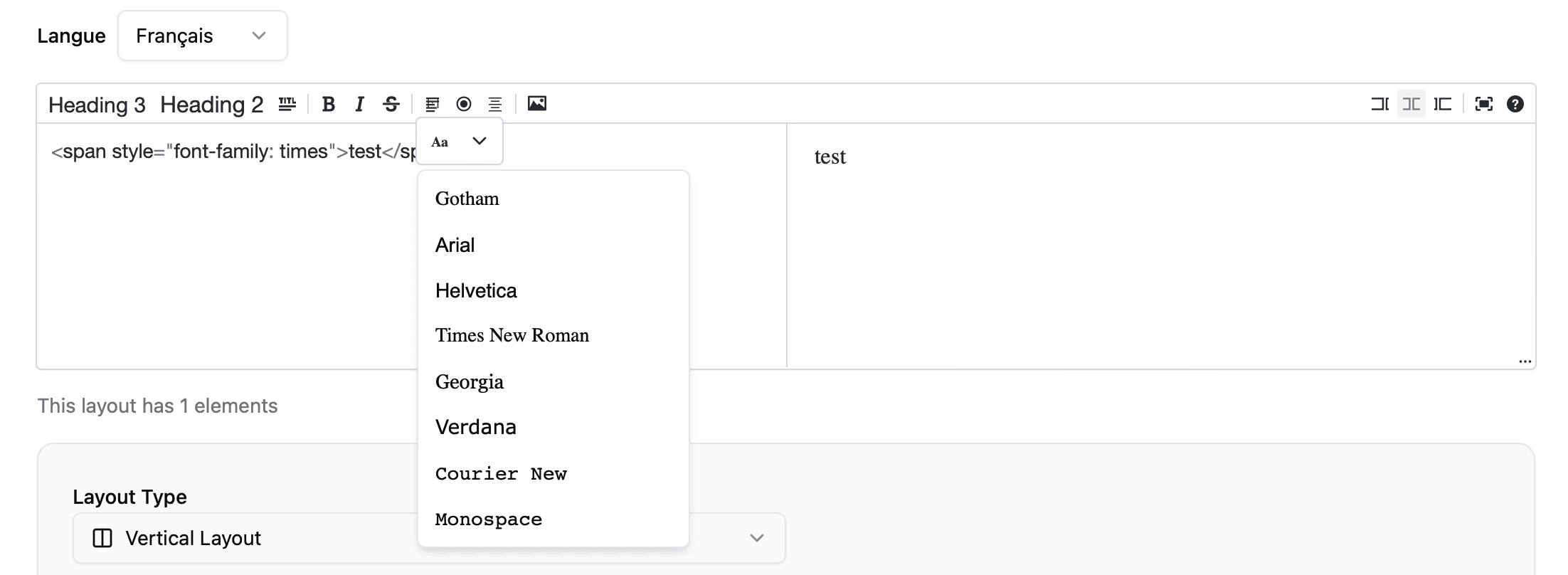
Typography
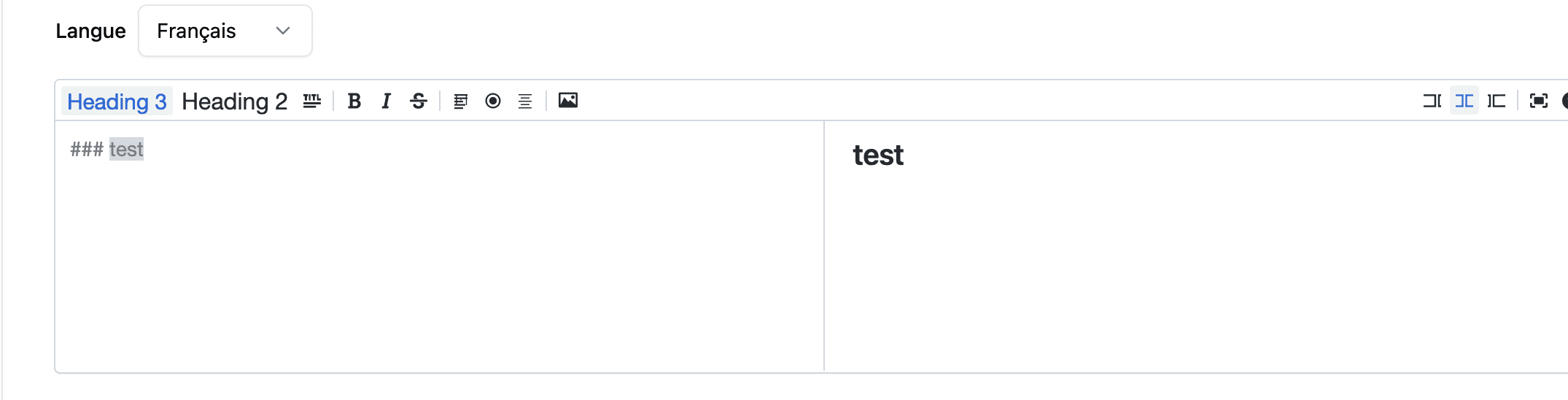
Text size
Interview “voice & text”
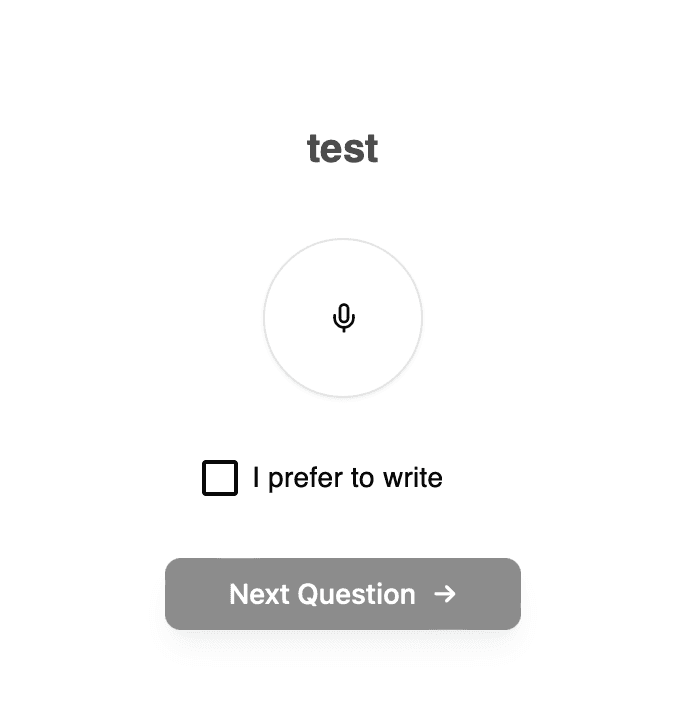
This design stays fix for the moment.
3 - How images interact with AI questions
Images can be displayed alongside the question
The AI will could then explicitly reference the image when asking contextual follow-ups.
Example:
After looking at this image and in consequence that you have a strong affinity with the brand, what are your first impressions?
Which specific element of the visual influenced your opinion the most?
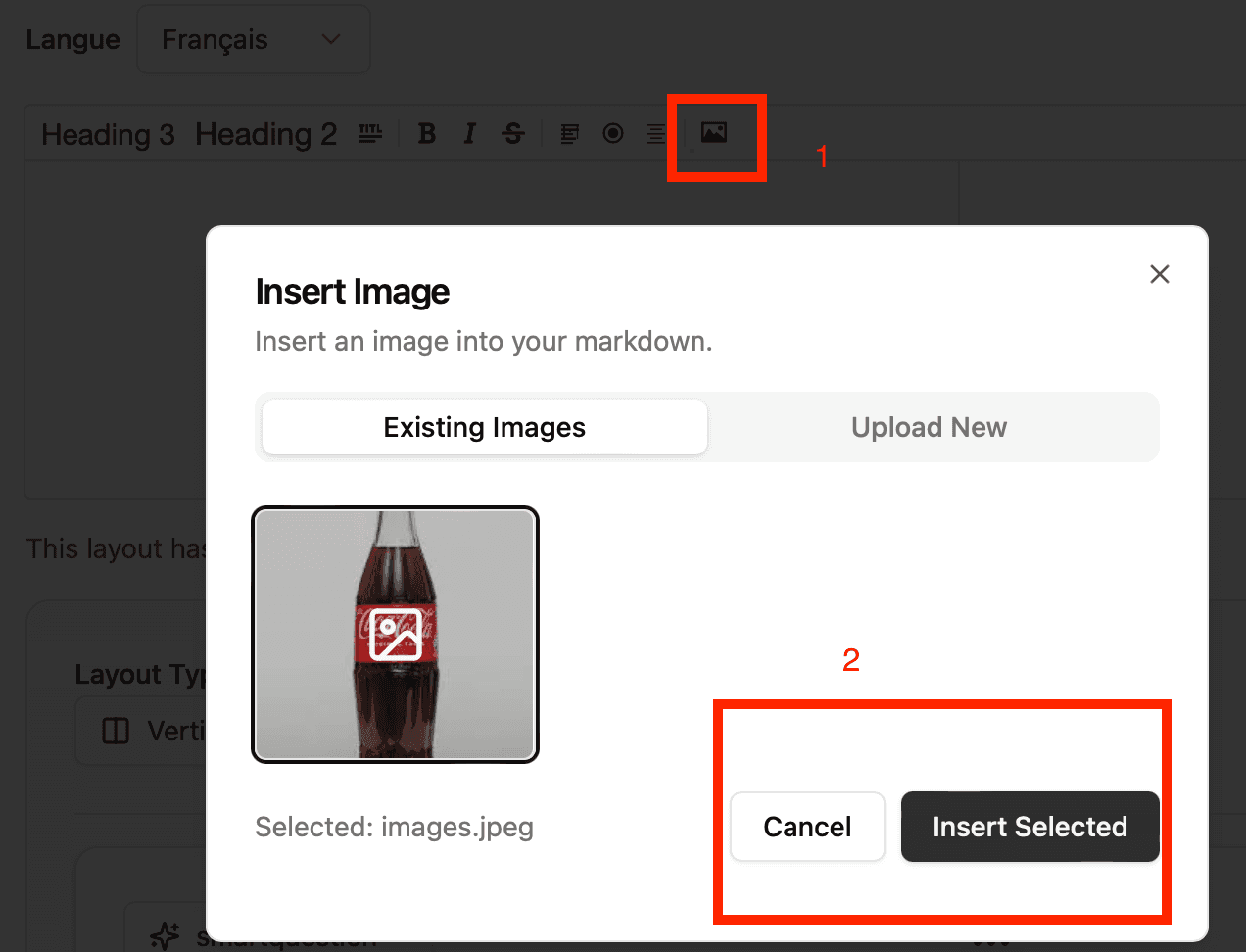
4 - Integrating an image
Best practices:
Use one clear image per question
Maintain consistent image quality
Avoid visual overload
Images anchor responses and improve recall and specificity.
5 - Starting from a template
Ready to get started?
You can kick off your SmartInterview in seconds by using this template based on an existing product-testing interview. It’s a great way to save time and build on proven best practices.: link
Cheers, and happy interviewing!
Designing an AI interview Context in Smartinterview
Designing an AI-powered interview in SmartInterview goes far beyond writing a single question.
The quality of insights depends on how well the interview context is defined.
The interview context allows the AI to behave like a skilled human interviewer:
asking relevant questions, adapting follow-ups, respecting language preferences, and maintaining visual and brand consistency throughout the experience.
This article explains, step by step, how to design a robust and scalable AI interview context in SmartInterview.
Skipping the learning and use a template
You can skip this step and directly use the following link to create your survey: link
1. Choosing the context of the interview
What is an interview context?
The interview context defines:
What the objective of the interview is.
How the AI should behave.
It acts as a shared frame of reference for all questions and follow-ups.
Key elements to define
Before creating any question, clearly think about:
Role
What is the role of the interviewer: Market Researcher or a HR person?
Research objective
Exploration (discover themes, motivations, perceptions)
Validation (test assumptions or hypotheses)
Evaluation (assess a concept, product, or service)
Target respondent
Consumer, professional, expert, or general public
Level of familiarity with the topic
Interview tone
Neutral and factual
Empathetic and conversational
Analytical and expert-driven
Example of a context definition
Here is a very neutral and simple guideline of an english brand testing AI context, for familiar respondents.
You can actually copy paste the topic and re-use it inside your survey
You are a market research specialist.
You are trying to understand what a person associates with Coca-Cola.
You interview them to learn what comes to mind and how they perceive the brand. The person speaks, and their comments are transcribed into text.
You should systematically ask questions related to their answers in order to obtain as much detail as possible.
Always respond in English and always ask follow-up questions
In this example:
The first line defined the role : market research specialist (very important)
The 2-3-4 lines represents the research objective
The 5 represent the rules : English language and asking question
2. Selecting the number of follow-up questions
LOI in a very strong concerns when we run market research. as we don't want to explode our cost of research.
LOI concerns
SmartInterview is a cost-effective solution that significantly reduces time-to-insight.
Based on 278 open-ended responses collected on tablets from European respondents in 2024, the median length of interview (LOI) per open-ended question is 13.75 seconds per answer.
This means that on mobile or desktop, you can reasonably expect a median response time below 10 seconds per follow-up question, thanks t
o our new design feature that automatically streams the open-ended prompt directly onto the respondent’s screen.
Insight quality concerns
Based on our experiments, we found that programming 2–3 follow-up questions is the optimal way to use the product while minimizing respondent fatigue.
In this configuration, open-ended questions become a powerful asset for capturing deeper insights, without increasing cognitive load or interview fatigue for respondents.
3. In-platform tutorial
With a chosen context and follow-up number, the next step is to design the survey.
Skipping the learning and use a template
You can skip this step and directly use the following link to create your survey: link
1- Creating the question
Click on the smart question in the builder
2- Designing the smartquestion
By clicking on "Configure", you will enter the context, the number of follow-up and the language of the interview.
Adapting Style, Colors, and Interview Templates
1 - Why visual consistency matters
A consistent interface:
Builds trust for respondents
Reduce fatigue and mis-understanding
Improves completion rates
Respondents are more engaged when the interview feels coherent and professional.
2 - Elements to align
Colors and brand palette
Typography
Text size
Interview “voice & text”
This design stays fix for the moment.
3 - How images interact with AI questions
Images can be displayed alongside the question
The AI will could then explicitly reference the image when asking contextual follow-ups.
Example:
After looking at this image and in consequence that you have a strong affinity with the brand, what are your first impressions?
Which specific element of the visual influenced your opinion the most?
4 - Integrating an image
Best practices:
Use one clear image per question
Maintain consistent image quality
Avoid visual overload
Images anchor responses and improve recall and specificity.
5 - Starting from a template
Ready to get started?
You can kick off your SmartInterview in seconds by using this template based on an existing product-testing interview. It’s a great way to save time and build on proven best practices.: link
Cheers, and happy interviewing!
Designing an AI interview Context in Smartinterview
Designing an AI-powered interview in SmartInterview goes far beyond writing a single question.
The quality of insights depends on how well the interview context is defined.
The interview context allows the AI to behave like a skilled human interviewer:
asking relevant questions, adapting follow-ups, respecting language preferences, and maintaining visual and brand consistency throughout the experience.
This article explains, step by step, how to design a robust and scalable AI interview context in SmartInterview.
Skipping the learning and use a template
You can skip this step and directly use the following link to create your survey: link
1. Choosing the context of the interview
What is an interview context?
The interview context defines:
What the objective of the interview is.
How the AI should behave.
It acts as a shared frame of reference for all questions and follow-ups.
Key elements to define
Before creating any question, clearly think about:
Role
What is the role of the interviewer: Market Researcher or a HR person?
Research objective
Exploration (discover themes, motivations, perceptions)
Validation (test assumptions or hypotheses)
Evaluation (assess a concept, product, or service)
Target respondent
Consumer, professional, expert, or general public
Level of familiarity with the topic
Interview tone
Neutral and factual
Empathetic and conversational
Analytical and expert-driven
Example of a context definition
Here is a very neutral and simple guideline of an english brand testing AI context, for familiar respondents.
You can actually copy paste the topic and re-use it inside your survey
You are a market research specialist.
You are trying to understand what a person associates with Coca-Cola.
You interview them to learn what comes to mind and how they perceive the brand. The person speaks, and their comments are transcribed into text.
You should systematically ask questions related to their answers in order to obtain as much detail as possible.
Always respond in English and always ask follow-up questions
In this example:
The first line defined the role : market research specialist (very important)
The 2-3-4 lines represents the research objective
The 5 represent the rules : English language and asking question
2. Selecting the number of follow-up questions
LOI in a very strong concerns when we run market research. as we don't want to explode our cost of research.
LOI concerns
SmartInterview is a cost-effective solution that significantly reduces time-to-insight.
Based on 278 open-ended responses collected on tablets from European respondents in 2024, the median length of interview (LOI) per open-ended question is 13.75 seconds per answer.
This means that on mobile or desktop, you can reasonably expect a median response time below 10 seconds per follow-up question, thanks t
o our new design feature that automatically streams the open-ended prompt directly onto the respondent’s screen.
Insight quality concerns
Based on our experiments, we found that programming 2–3 follow-up questions is the optimal way to use the product while minimizing respondent fatigue.
In this configuration, open-ended questions become a powerful asset for capturing deeper insights, without increasing cognitive load or interview fatigue for respondents.
3. In-platform tutorial
With a chosen context and follow-up number, the next step is to design the survey.
Skipping the learning and use a template
You can skip this step and directly use the following link to create your survey: link
1- Creating the question
Click on the smart question in the builder
2- Designing the smartquestion
By clicking on "Configure", you will enter the context, the number of follow-up and the language of the interview.
Adapting Style, Colors, and Interview Templates
1 - Why visual consistency matters
A consistent interface:
Builds trust for respondents
Reduce fatigue and mis-understanding
Improves completion rates
Respondents are more engaged when the interview feels coherent and professional.
2 - Elements to align
Colors and brand palette
Typography
Text size
Interview “voice & text”
This design stays fix for the moment.
3 - How images interact with AI questions
Images can be displayed alongside the question
The AI will could then explicitly reference the image when asking contextual follow-ups.
Example:
After looking at this image and in consequence that you have a strong affinity with the brand, what are your first impressions?
Which specific element of the visual influenced your opinion the most?
4 - Integrating an image
Best practices:
Use one clear image per question
Maintain consistent image quality
Avoid visual overload
Images anchor responses and improve recall and specificity.
5 - Starting from a template
Ready to get started?
You can kick off your SmartInterview in seconds by using this template based on an existing product-testing interview. It’s a great way to save time and build on proven best practices.: link
Cheers, and happy interviewing!