Market research for food and beverage brands, from recipe to shelf

Food and drink launches fail on details that are easy to test: a flavour name nobody understands, a pack that disappears on the shelf, a price just above the category norm.

No credit card50 free respondentsGDPR & CCPA compliant
Friends tasting craft beer in a brewery taproom

How often do you drink energy drinks?

DailyWeeklyMonthlyNever

What do you drink when you need energy?

I know... hum... an energy drink.

Which one, and is it the taste, the price or the effect that makes you pick it?

50free respondents
to start

A food & drink study, from one question to the answer

1. Ask2. Follow up3. Analyse
Live
Survey

How often do you drink energy drinks?

DailyWeeklyMonthlyNever

What do you drink when you need energy?

I know... hum... an energy drink.

AI follow-up

Which one, and is it the taste, the price or the effect that makes you pick it?

Answering by voice…

The AI asks one more question whenever an answer is vague, in the respondent's language.

Live results
How often do you drink energy drinks?n = 521
Daily12%
Weekly29%
Monthly24%
Never35%
521open answers coded into themes
Taste first39%
Energy without sugar25%
Price at the shelf16%

Illustrative example with sample data, not a client study.

Food and beverage market research tests those details with the consumers who buy the category, before production, so the launch starts from what the shopper sees.

SmartInterview measures appeal and purchase intent for each option and asks consumers why, including the occasions when they would buy it.

Why market research matters for food and beverage

Shelf decisions take seconds. A pack, a claim or a flavour description has to work at first glance, and only shoppers can tell you whether it does.

  • Choose between flavours or recipes before production
  • Test packs and on-pack claims
  • Understand consumption occasions
  • Set a price that fits the category
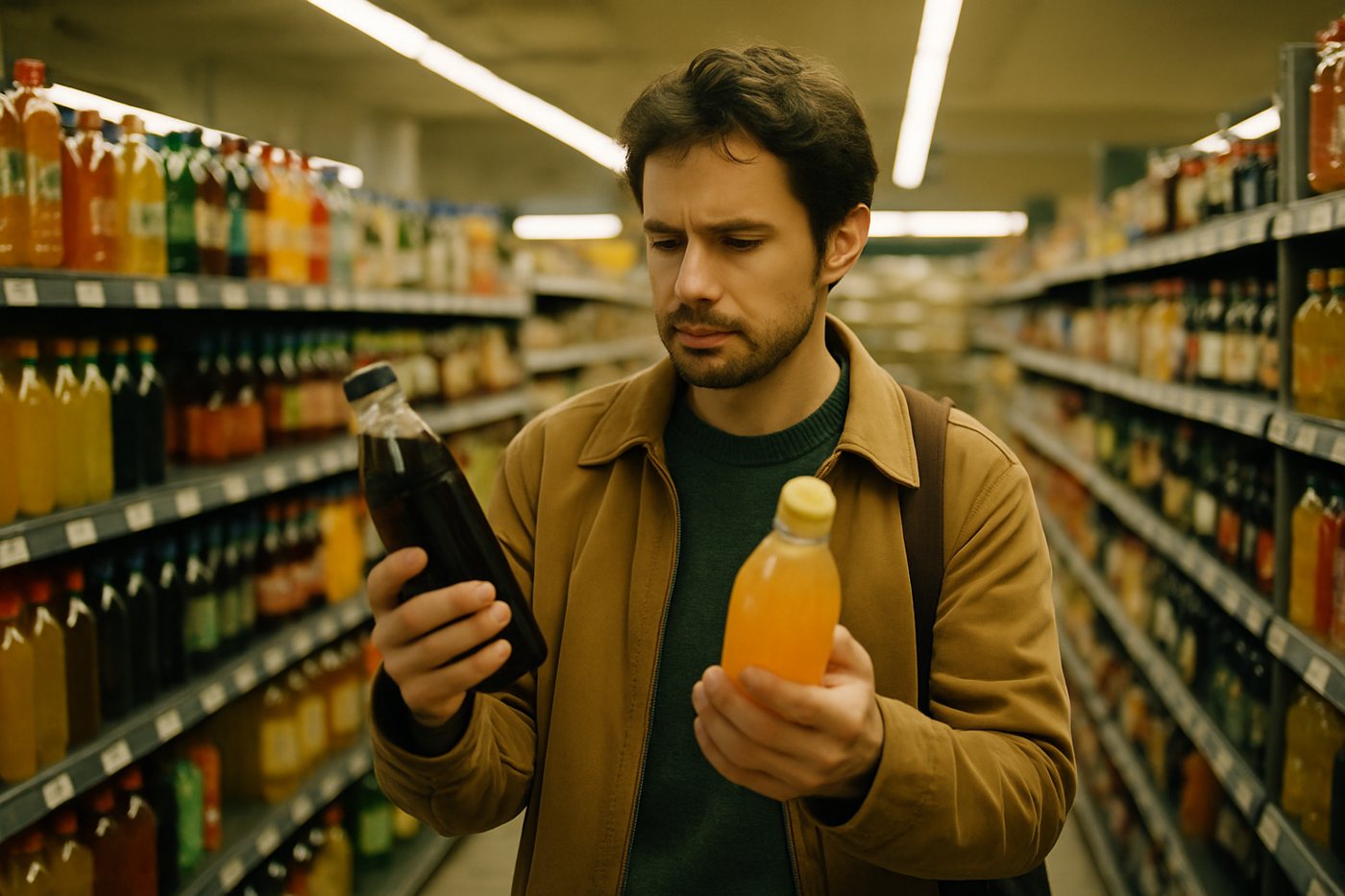
A shopper comparing two bottles in a drinks aisle
From question to study

Questions we help food and beverage teams answer

Typical situations in this sector, and how we would set up the study for each.

Research objective

Start from the category, not the product

Who we ask

Your subscribers and buyers, triers or not

How SmartInterview answers it

General questions first, then a branch for people who know the product and a concept test for the others

Routing

Have you tried the new sparkling tea?

Yes, several timesOnceNever
Research objective

Settle the internal debate with data

Who we ask

Category drinkers

How SmartInterview answers it

A question on why they drink less or differently, cross-tabbed by frequency and age

AI follow-up

You drink less soda than a year ago. Why?

Trying to cut sugar.What do you drink instead now, and does it feel like a treat?
Research objective

Find the words that make people want it

Who we ask

Light and regular drinkers

How SmartInterview answers it

Several descriptions shown in random order: which one appeals most, which one least

Words that sell

Which description makes you want it most, and least?

Naturally fizzyZero sugarLeastAlpine herbsMost
Research objective

Understand substitution

Who we ask

People who skipped the category recently

How SmartInterview answers it

The AI asks what they chose instead and why, coded into themes

What instead, and why

Last time you skipped it, what did you take instead?

A beer.Was it the moment, the price or the taste that made you choose beer?
Research objective

Get finer detail than market panels give

Who we ask

Your own customers and webshop buyers

How SmartInterview answers it

Your own styles and brands as answer options, with quotas on what they actually buy

Your own categories

Which style did you buy last?

IPALagerWheatSour
Research objective

Test the message right after tasting

Who we ask

People at a tasting or event

How SmartInterview answers it

A QR code survey on the spot, by voice or text, before memory fades

Right after tasting

In a few words, what is this drink about?

0:14
“Fresh, not too sweet, like a summer afternoon.”

Run this study on your own customers

50 free respondents · no credit card · GDPR and CCPA compliant

Start free →

How it is done today, and with SmartInterview

TodayWith SmartInterview
Tasting panels give scores but no reason behind themAfter tasting, consumers explain their score by voice, and the AI probes
Recipe choices settled by internal debate, not by drinkersFlavour concepts rated by category buyers, with the words that drove choice
Retailer listings pitched without consumer evidenceCollect purchase intent and reasons from your target shoppers within days
Open feedback from sampling events stays in notebooksA QR code at the stand, answers coded into themes automatically

Questions you can answer

  1. 1Which flavour should we launch first?
  2. 2Does the pack stand out and look premium?
  3. 3Is the health or origin claim believable?
  4. 4When would people drink or eat this product?
  5. 5Which brand would it replace?
  6. 6What price feels right for the category?

Who you can reach

Category buyers matching your targetYour customers and communityShoppers of competing brandsSpecific regions, for regional productsSeveral countries and languages

What you can learn

Which option wins

Appeal, uniqueness and purchase intent for flavours, recipes or pack designs, shown one at a time or side by side.

Occasions and switching

When and where the product would be consumed, and which brands it would replace in the basket.

What the pack communicates

Whether the pack and claims are understood, believed and noticed, with the words shoppers use.

How SmartInterview works for food and beverage

  1. 1

    Define the business decision

    Name the decision: which flavour, which pack, which claim, which price or which market.

  2. 2

    Generate the survey

    Describe the decision in one sentence. SmartInterview drafts the questionnaire, scores its quality and flags leading or double-barrelled questions before anyone answers.

  3. 3

    Recruit the target audience

    Reach category buyers through your community or a panel partner. For taste, run a home-use test where consumers try the product and then answer.

  4. 4

    Collect quantitative and qualitative answers

    Structured questions give the numbers. When an answer is vague, the AI asks a follow-up, by voice or text, in the respondent's language.

  5. 5

    Analyze segments and open-ended feedback

    Open answers are coded into themes with counts and sentiment, and every theme links back to the verbatims behind it. Compare segments side by side.

  6. 6

    Turn insights into recommendations

    Export the findings, the themes and the quotes to the team that has to decide, as a report or a spreadsheet.

Example studies

YouGov regional product study
Customer story

YouGov: opinions on regional products

Read the customer story →

Challenge

YouGov collected consumer opinions about regional products in Switzerland, where respondents answer in different languages and dialects.

Research design

Survey with AI follow-up questions on open answers.

Respondents

Consumers in two Swiss language regions.

Business decision

YouGov used SmartInterview for its regional product study.

Key insights

  • Data quality twice as high on two Swiss dialects

Food and beverage research topics teams search for

Taste test survey questions

Ask overall liking, then sweetness, texture and aftertaste on a short scale, and finish with what they would change. SmartInterview follows up on answers like 'too strong' to find out which attribute they mean.

How to run a home-use test for a food product

Send the product to screened consumers, give them a few days to use it normally, then send the survey link. Asking after real use gives more reliable answers than a one-sip test.

Beverage consumer survey template

Cover occasions, current brands, purchase channel, price paid and what would make them try something new. SmartInterview generates a first draft from your goal that you then adapt to your drink.

New flavour concept testing

Describe several flavour ideas, measure appeal and purchase intent, and ask what each one makes people imagine. Coded verbatims show which flavours sound appetising and which sound artificial.

How to research plant-based food consumers

Separate committed buyers from occasional flexitarians, then ask what triggers a purchase and what stops a repeat. Taste, price and ingredient lists often come up, but let respondents say it in their own words.

Restaurant and out-of-home food survey

Use a QR code on the table or the receipt so guests answer right after the meal. Short voice answers capture what they liked or missed while the experience is fresh.

Measure purchase intent for a new food product

Use a five-point purchase intent scale on the full concept including price, then ask why. The reasons tell you whether a weak score comes from the product, the price or the format.

Food consumer research in Switzerland

Origin, regional products and price sensitivity vary between language regions. Run one questionnaire in French, German and Italian and compare the regions side by side.


Pricing

Choose your respondent volume

Pro and Ultimate prices update instantly as you change the number of respondents per month.

300 respondents / month
CHF 79
Pro / month

FREE

CHF050 respondents included
  • 1 member
  • 50 respondents
  • Automated survey design
  • AI-powered analysis & dashboard
  • Share surveys via link, WhatsApp or QR code
Get started for free
RECOMMENDED

PRO

CHF79/ month

starting at 150 respondents

  • Everything in Free, plus:
  • Access to 300 respondents per month
  • Up to 3 members
  • Email invitations
  • Client / externals collaboration
  • AI-powered analysis of open-ended responses
Get started· CHF 79

ULTIMATE

CHF149/ month

starting at 500 respondents

  • Everything in Pro, plus:
  • Access to 500 respondents per month
  • Up to 5 members
  • Qualitative interview transcription
  • Advanced coding & categorisation
  • Company branding
  • Remove SmartInterview branding
  • Executive report with results (PDF)
Get started· CHF 149

ENTERPRISE

Let's talk
  • Everything in Ultimate, plus:
  • Unlimited members
  • Custom respondent volumes
  • Custom integrations
  • Dedicated support
  • Security & procurement review
Contact us

Whether you collect one respondent this month or ten next quarter, you only pay for what you use. Your respondent credits are valid for 3 years.

Frequently asked questions

It is consumer research that guides decisions on recipes, flavours, packaging, claims, pricing and positioning for food and drink products.

Show pack designs as images, one at a time or side by side, measure appeal, standout and credibility, and ask what made each one appealing or forgettable.

Taste needs product in hand. Run a home-use test where consumers try the product and then answer, or test flavour concepts from their descriptions.

Measure clarity and credibility of each claim and ask what makes it believable. Regulatory review of claims stays with your team.

About 100 to 150 per segment give a clear ranking between options.

Yes. Screen by region and let respondents answer in their language or dialect.

The first 50 respondents are free. Paid plans start at CHF 45 per month for 150 respondents per month.

A study can be live the same day, with results within days.

Test it before it reaches the shelf

One flavour, one pack, one claim. Ask the shoppers who buy the category.

No credit card50 free respondentsGDPR & CCPA compliant